Restaurant · Omakase · Reservations · Brand
Sushi Snob
A digital presence for an omakase restaurant in Washington, DC, built to feel as considered as the eighteen courses it serves, and to turn a visit into a reservation in as few taps as possible.
The project at a glance
Help guests explore the restaurant and move from the website to a reservation, takeout order, or gift card.
What we delivered
- A restaurant website built around the omakase experience and course photography.
- Direct paths to the existing reservation, ordering, and gift-card providers.
- Location, hours, and contact information alongside the guest experience.
Sushi Snob is an omakase counter on M Street NW, recognized among Washingtonian's best sushi in the DC area. Omakase is a high-trust, chef-led experience: limited seats, a fixed eighteen-course menu, and a reservation-only model. The website has one job above all others, get the right guest to the right reservation without friction.
The challenge with a restaurant like this is restraint. The site cannot look like a generic template, and it cannot bury the things people actually come to do, reserve a seat, order to go, or buy a gift card, under marketing copy. It needs to carry the calm, precise tone of the room itself, load instantly on a phone at the table, and route guests to the booking and ordering systems the restaurant already runs on.
An interface with the tone of the room
The design is built around a single idea borrowed from the menu itself, harmony: the balance of flavor, season, and soul. We paired an editorial Japanese serif with a quiet sans for body text, gave the layout generous negative space, and let full-bleed photography of the courses do the talking. Nothing competes for attention; the food leads.
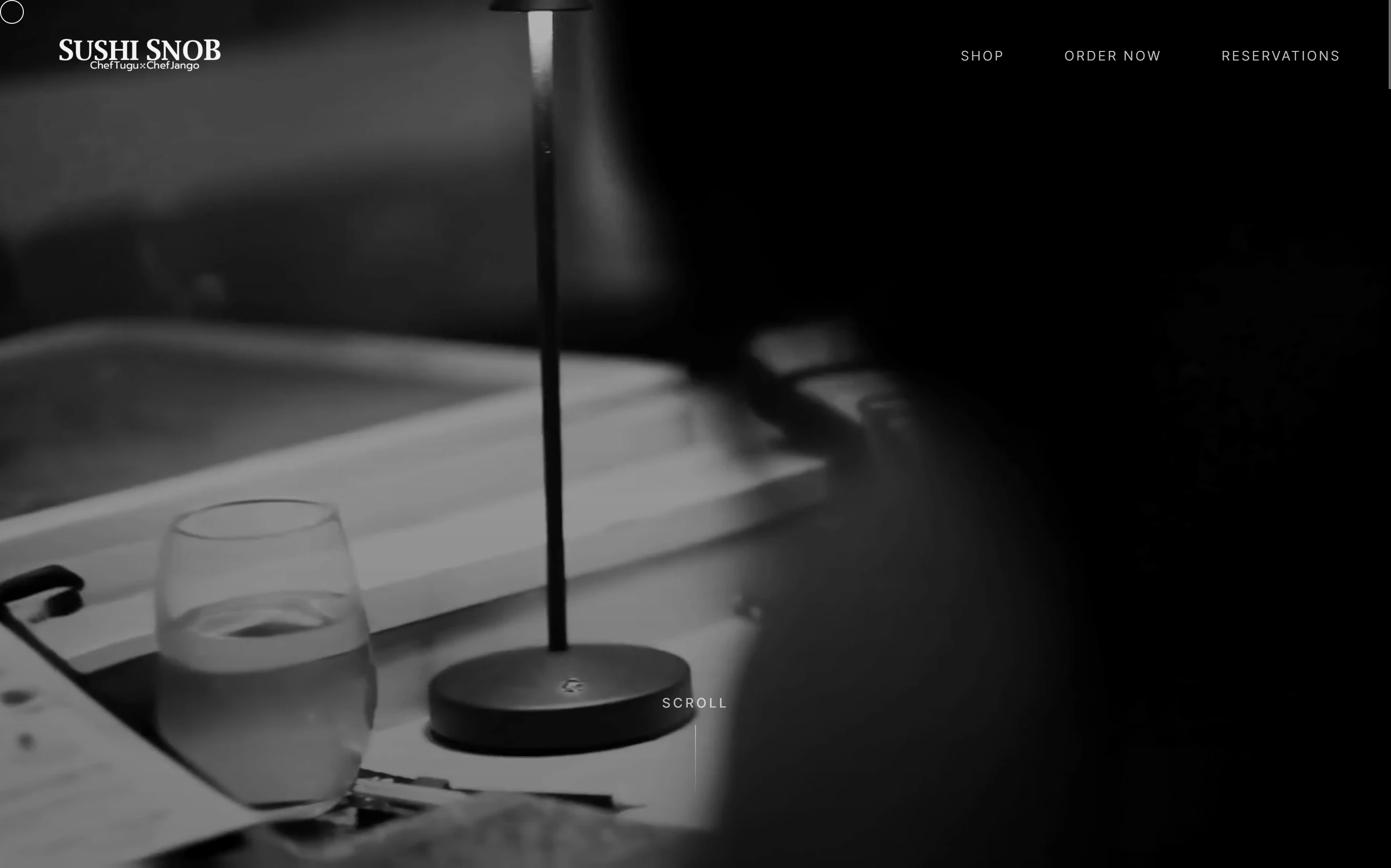
A short hero film sets the mood the moment the page opens, then gives way to a gallery that walks through the experience course by course. The typography, spacing, and motion are deliberately understated so the site reads as confident rather than loud, the same restraint that defines the meal.
Booking, ordering, and gifting
A restaurant of this kind already runs on specialized systems, and the right move is to route guests into them cleanly rather than rebuild them. We made each path a first-class action on the site.
Reservations hand off directly to the restaurant's Resy booking page, so availability and seating stay in one source of truth. Takeout routes to the online ordering system, and gift cards link to the restaurant's commerce provider, both surfaced prominently so a guest never has to hunt for them. Location, hours, and contact are anchored by an embedded map for anyone deciding on the spot.
The result is a site that behaves like a concierge: it tells the story, then gets out of the way and sends the guest exactly where they intended to go.
Fast, static, and durable
The site is a React and Vite single-page application, built as static assets and served from Amazon S3 behind a CloudFront CDN. There is no server to patch and no database to maintain, the kind of footprint that suits a restaurant: it stays up, it loads fast, and it costs almost nothing to run.
Media is delivered from the CDN so the high-resolution course photography and hero film load quickly on a phone, and the build is tuned for performance and search discoverability. It is a small site, engineered with the same care as a large one.
What we built
Brand & design
Editorial Japanese typography, full-bleed course photography, hero film
Reservations
Direct Resy hand-off with a single source of truth for availability
Ordering & gifting
Online ordering and gift-card flows surfaced as primary actions
Engineering
React + Vite SPA on S3 / CloudFront, fast, static, low-maintenance